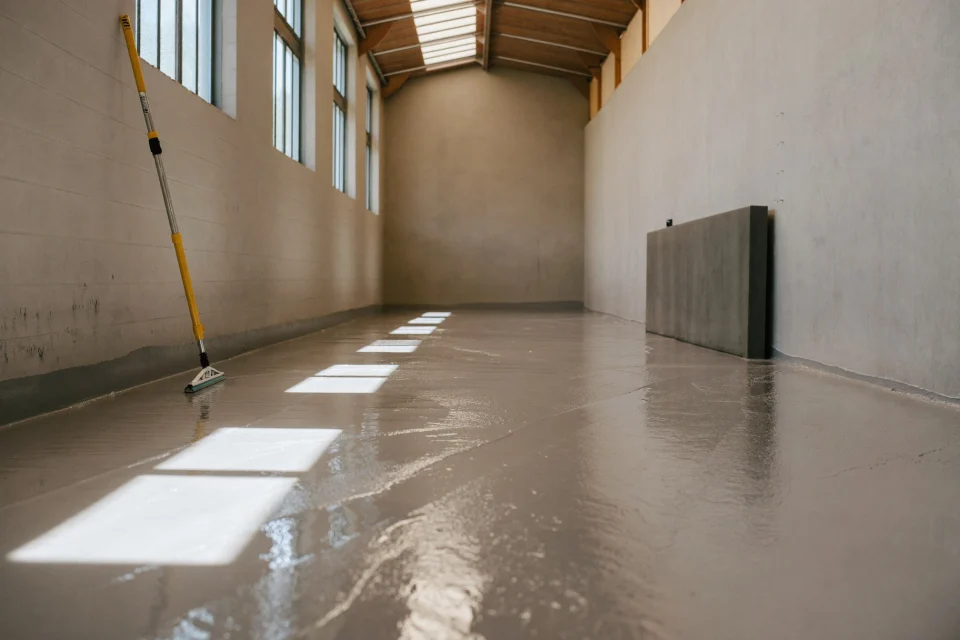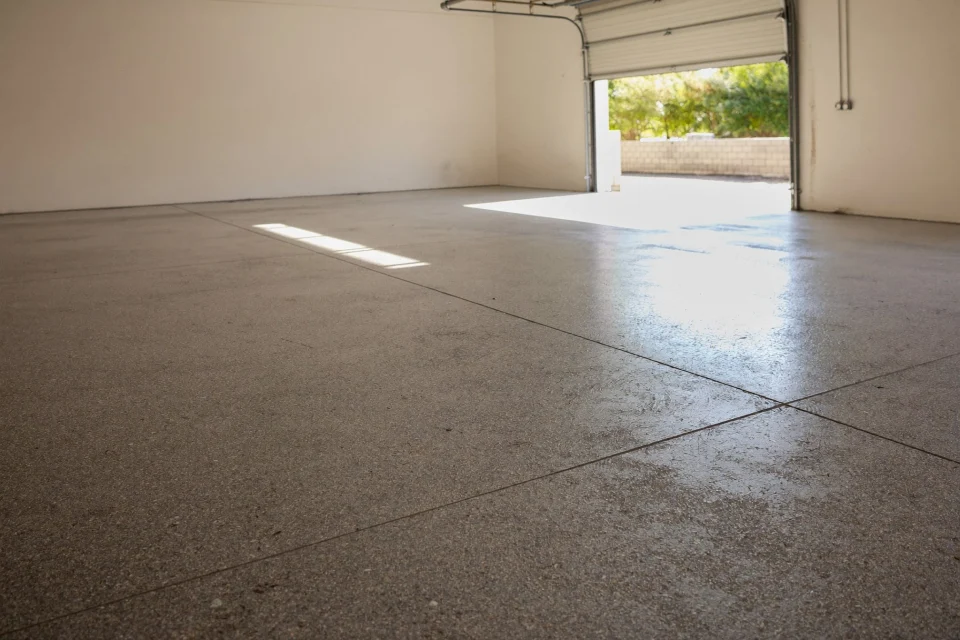
Hychem 177ESD LD — Dissipative antistatic epoxy floor system, thin film, 2 × 0.2 L/m², for light traffic
Product description
The Hychem 177ESD LD system: a complete, Australian made thin film dissipative antistatic floor for light traffic areas requiring a controlled resistance to earth. Advanced carbon nanotube conductive technology carries static to earth through the coating itself, reducing the copper tape and gridding conventional ESD floors depend on, over a dedicated dissipative primer plane. Primer, dissipative plane and seal coats are matched layer by layer under one specification.
Typical applications
- Electronics manufacturing & SMT
- Data centres
- Cleanrooms & pharmaceutical
- Defence & aerospace
- Fire & explosion risk areas
- Munitions & solvent stores
- Hospitals & laboratories
- Equipment rooms
Features and benefits
- Conductivity built in, not taped on — Advanced carbon nanotube technology reduces the requirement for copper tape and gridding. Simpler to install, and far easier to achieve a uniform, compliant result across the area.
- Supplier support is built in — An ESD floor is only as good as its testing. On every job, resistance to earth is verified between coats, not just at handover, with a local Hychem technical rep on site and ITPs for sign-off.
- Australian made, locally stocked — Manufactured at Smeaton Grange NSW with full local testing and technical support. No import lead times or offshore stock risk on programme critical works.
- One system, single accountability — Primer, dissipative plane and seal coats are chemically matched slab to surface, supplied by a single manufacturer under a single specification.
Approvals and certifications
- IEC 61340-4-1
- IEC 61340-5-1
- DIN EN 1081
- DIN ISO 4624 adhesion
- DIN EN ISO 5470-1 abrasion
- AS/NZS 4586 slip resistance
- ISO 9001 manufacture
Application guidelines
Summary from the data sheet — follow the PDF on site.
System build-up
Five layers, slab to surface:
- Concrete substrate — Ground or shot blasted to CSP 2 · 25 MPa min, 1.5 MPa surface tensile
- Hychem GP Epoxy Primer — Seals and keys the substrate · 6 m²/L
- Primer SD, dissipative plane — Black conductive layer · 8 m²/L · connected to earth points
- 177ESD TC, first coat — 0.2 L/m² · dissipative seal coat · nanotube conductive network
- 177ESD TC, second coat — 0.2 L/m² · aluminium oxide grit as required
Earth points are installed once the primer has cured, before the dissipative plane goes down.
Each layer earns its place. The GP Primer seals the slab; Primer SD lays a continuous black dissipative plane connected to the earth points; and two coats of 177ESD TC carry charge from the surface down through their carbon nanotube network to that plane. Because the conductive path is in the material itself, the copper tape and gridding a conventional ESD floor depends on is largely eliminated, and with it the most common cause of failed conductivity readings.
The nominated system
| System | LD system, 2 × 0.2 L/m² |
|---|---|
| Build-up | GP Primer + Primer SD + 177ESD TC + 177ESD TC |
| Rated for | Light traffic. Suited to cleanrooms, laboratories, electronics production and light traffic equipment rooms |
| Total build | Two coats of 177ESD TC at 0.2 L/m² each, 0.4 L/m² in total, over the Primer SD dissipative plane. |
| Conductivity | Rg ≤ 10⁹ Ω to IEC 61340-4-1 and DIN EN 1081, verified between coats on every project. |
| Earthing | One point per 100 m² maximum and one per slab, joint to joint. One per 50 m² is recommended. See Section 04. |
| Substrate | As a thin film roller coat system, the finish follows the profile of the slab. Repair and level the substrate before priming where a flat finish is required. |
| Finish | Seamless gloss, or customisable anti-slip texture via aluminium oxide grit broadcast into the final TC coat. |
Where an area will carry vehicular or heavier traffic, the 177ESD SL system of GP Primer, Primer SD, 177ESD SL topping at 2 mm and 177ESD TC should be specified instead. It is not included in this standard nomination unless separately specified.
Application sequence
| Step | What it does | Method | Rate / specification |
|---|---|---|---|
| 01 Prepare substrate | Remove laitance, coatings and contaminants | Diamond grind | To CSP 2 · NACE 02203 / ICRI 03732 |
| 02 Hychem GP Epoxy Primer | Seals and keys the substrate | Roller | 6 m²/L · Overcoat within 24 h |
| 03 Install earth points | Once the primer has cured · see Section 04 | Applicator | 1 per 100 m² max · 1 per slab · 40–100 mm off wall |
| 04 Hychem Primer SD | Black dissipative plane | Squeegee and back roll | 8 m²/L · Cure min 16 h · overcoat within 24 h |
| 05 Verify resistance to earth | Between-coat conductivity test, documented | DIN EN 1081 | Rg ≤ 10⁹ Ω · ITP hold point |
| 06 Hychem 177ESD TC, first coat | Dissipative seal coat | Roller | 0.2 L/m² · Following coat within 24 h |
| 07 Hychem 177ESD TC, second coat | Dissipative seal coat, sets colour and slip rating | Roller | 0.2 L/m² · Al2O3 grit as required |
| 08 Final conductivity verification | Hychem rep on site · ITP sign-off for handover | IEC 61340-4-1 | Rg ≤ 10⁹ Ω · Confirms compliance for handover |
| 09 Connect to building earth | Each terminal tied back and certified | Electrical contractor | AS/NZS 3000 · Continuity confirmed and certified |
Do not substitute the build-up. Conductivity is a system property. Consumption rates, layer sequence and earthing layout are set together to achieve the specified resistance to earth. Substituting a layer, a product or a rate compromises the specified performance of the system.
Substrate requirements
Concrete must be a minimum 25 MPa compressive strength with 1.5 MPa surface tensile strength, cured a minimum of 28 days, firm, clean and dry. Prepare by grinding or shot blasting to the appropriate CSP in accordance with NACE 02203 or ICRI Technical Guideline No. 03732. Do not apply over damp surfaces or where rising moisture is present.
Environmental conditions
Apply between 10 and 30 °C with the substrate at least 3 °C above dew point. Observe 21 °C at less than 85 % RH, or 10 °C at less than 75 % RH, to avoid amine bloom. Primer SD applies between 15 and 25 °C at less than 80 % RH, a narrower window than the other layers, so plan works accordingly.
Records and documentation
Substrate and air temperature, humidity, dew point, batch numbers and consumption rates are to be recorded through application and cure. These records, together with the between-coat and final conductivity results, form part of the completed project documentation.
System components
- Hychem GP Epoxy Primer — A general purpose, solvent free epoxy primer that seals the prepared slab and anchors the system. Applied at 6 m²/L. Also used as an epoxy mortar for patching, re-levelling and forming falls where required. Earth points are installed once it has cured, before the dissipative plane goes down. VOC content 14 g/L.
- Hychem Primer SD — A two component, solvent free black dissipative layer, the conductive plane beneath every Hychem dissipative coating. No odour, with excellent adhesion to concrete and masonry, and recommended for cleanrooms, electronics production, hospitals and pharmaceutical facilities. Applied at 8 m²/L and overcoated within 24 hours.
- Hychem 177ESD TC — The coloured, gloss dissipative epoxy coating that forms the wearing and sealing surface of the LD system, applied in two coats at 0.2 L/m² each over Primer SD, with aluminium oxide grit broadcast into the final coat as required for slip resistance. Suited to light traffic areas.
Finish and colour
Seamless gloss, with slip resistance fully customisable through the aluminium oxide grit broadcast into the final TC coat, set zone by zone to whatever rating the area demands and rated to AS/NZS 4586. Slip resistance testing of the actual finish can be arranged on request.
Light Grey N35 is the standard colour and is available for any size of area. The full range at hychemcolours.com.au is available subject to colour minimum order quantity. Conductive materials can subtly affect the finished colour, most evident in lighter shades, so confirm with a sample panel before the colour is locked in.
Static where it matters
Beyond protecting sensitive electronics, the dissipative surface prevents electrostatic charge accumulating in areas subject to fire and explosion risk, including solvent stores, munitions and hazardous goods handling.
Earthing points
Earth point locations are to be nominated by the electrical engineer or the builder and marked up on the floor plan before coating works begin. Once the system is down the position is fixed, and adding a point later means cutting into a finished floor.
| Quantity | One earth point per 100 m² is the maximum permitted spacing. Hychem recommends one point per 50 m² as best practice, particularly in larger open areas and where the floor will carry wheeled traffic. |
|---|---|
| Per slab | Each slab requires its own earth point, joint to joint, regardless of area. A 50 m² slab still takes one point. The dissipative plane does not carry across a joint, so each side of a joint needs its own connection. |
| Redundancy | In high traffic areas, allow a spare point in case the first is damaged over the life of the floor. The cost at installation is negligible against retrofitting one later. |
| Position | Point centres sit between 40 mm and 100 mm from the wall, with 100 mm being the typical Hychem position. Locate them out of the way, where they will not be built over by fixed plant, racking or partitions, and where the connection stays accessible for future testing. |
| Marking up | Positions are to be marked on the floor plan by the electrical engineer or builder and confirmed on site before the GP Primer goes down. The setout is to be issued to the applicator ahead of the works so the points can be installed at the correct stage. |
| No grid required | A conventional ESD floor relies on a copper tape grid bonded to the primed slab, typically run out at around 5 m by 5 m centres, to carry charge back to the earth points. The 177ESD TC coats carry the conductive network within the material itself, so copper tape is used only at the earth point, to bond the dissipative plane to the grounding plate. |
Flooring applicator: Installs the earth point hardware within the floor build-up: the fixing into the slab, the copper tape connection, the stainless steel grounding plate and the terminal. This is done once the GP Primer has cured and before the Primer SD dissipative plane is applied, so the point is encapsulated by the system. Also responsible for protecting the terminal through the remaining coats, and for cleaning it down once the system has cured.
Electrical engineer or licensed electrical contractor:
- Nominates the number and position of earth points for each area, in line with the minimums above and any project or client ESD control programme requirements.
- Connects each earth point terminal back to the building's electrical earth once the floor is fully cured.
- Confirms continuity of that connection and compliance with AS/NZS 3000 and relevant site electrical requirements.
- Certifies the earthing installation.
- The floor cannot dissipate charge until the final connection is made. Connection to building earth is a hold point at the end of the works, not something to be picked up after handover. Confirm the electrical contractor has this in their scope and programme before coating works start.
- 0 5 · T E C H N I C A L D A T A B Y – P R O D U C T P E R F O R M A N C E Every layer, tested Values from the current Hychem technical data sheets. Refer to each TDS for full application guidance.
- P R I M E R S D , D I S S I PAT I V E P L A N E Colour Black Mixing ratio (A:B) 8.0 L : 4.0 L Working time 30–40 min Application temp 15–25 °C Relative humidity < 80 % Consumption 0.10–0.15 L/m² Foot traffic (25 °C) 8–12 h Overcoat 16–24 h Adhesion (DIN ISO 4624) > 1.5 N/mm² Resistance to earth Rg ≤ 10⁹ Ω Shelf life 12 months Clean up Water 1 7 7 E S D T C , S E A L C O AT ( T W O C O AT S ) Finish Coloured gloss Mixing ratio (by vol) 3 : 1 Working time (25 °C) ~25 min Application temp 10–30 °C Dew point margin ≥ 3 °C Consumption (TDS range) 0.3–0.6 L/m² Nominated rate, LD system 2 × 0.2 L/m² Following coat Within 24 h Adhesion (DIN ISO 4624) > 1.5 N/mm² Conductivity (EN 1081) Rg ≤ 10⁹ Ω Abrasion (ISO 5470-1) < 60 mg/1000 cyc Shelf life 24 months Clean up Solvent X / IPA C E R T I F I C A T I O N R E G I S T E R P R O D U C T P R O P E R T Y S TA N D A R D / M E T H O D R E S U LT 177ESD LD system Resistance to earth IEC 61340-4-1 · DIN EN 1081 Rg ≤ 10⁹ Ω Verified between coats, every project 177ESD LD system Electrostatic control IEC 61340-5-1 Rg ≤ 10⁹ Ω Within the dissipative band 177ESD TC Adhesion and abrasion DIN ISO 4624 · DIN EN ISO 5470-1 > 1.5 N/mm² < 60 mg / 1000 cycles GP Epoxy Primer VOC content ASTM D3960 · Green Star V3 IEQ-13 14 g/L Limit 140 g/L 177ESD TC finish Slip resistance AS/NZS 4586 Set by grit broadcast Zone by zone · testing of the actual finish on request All products Manufacture and batch control ISO 9001 quality management system Smeaton Grange NSW Australian made, locally stocked The 177ESD coatings are industrial flooring finishes and may discolour under sustained ultraviolet exposure. This has no effect on performance and internal areas present no meaningful exposure. Store under shelter at 23 °C in original unopened containers. Full technical and safety data sheets are issued with this specification package.
- 0 6 · S U P P O R T B A C K E D , L O C A L L Y Local support, from sample to sign-off A dissipative floor is a critical system. It either meets its resistance targets or it does not, and that depends on supplier support and thorough testing as much as on the material. Hychem manufactures at Smeaton Grange NSW, with over 30 years of manufacturing experience in Australia, a local technical rep on every job and ITPs for signoff at every hold point.
- 30+ yrs Manufacturing experience in Australia 100 % Australian made and locally stocked, Smeaton Grange NSW 2 wks Notice for an on-site sample or prototype panel, and for manufacture Through the installation Resistance to earth testing between coats on all projects, documented for complete approvals A local Hychem technical rep on every job, with thorough ITPs for hold point sign-off Full local technical support before and after handover Samples or prototype panels supplied on request Test results issued as part of the handover package Quality assurance requirements Consistent results depend on the complete nominated build-up being installed to specification, subject to:
- Application by a Hychem approved applicator, to the build-up, sequence and consumption rates specified Substrate meeting the stated strength, cure and moisture requirements, prepared to the nominated CSP and verified prior to priming Environmental conditions observed and recorded through application and cure Batch numbers and consumption rates recorded for every coat Hychem hold point inspections attended and the ITP signed off at each stage No substitution of any product, layer or rate within the system Substrate movement, structural cracking, rising moisture, and damage from misuse or impact remain outside Hychem's control and are the responsibility of the applicator and the builder.
- H E A D O F F I C E Unit 1, 30 Bluett Drive Smeaton Grange NSW 2567 P H O N E 1300 HYCHEM Technical and specification enquiries W E B HYCHEM.COM.AU Technical and safety data sheets This product is manufactured to conform to the technical specifications published in the product literature. The quality and fitness of the product is dependent upon the proper use and application of the product by the applicator. Field support, where provided, does not constitute supervisory responsibility. The technical information and application advice given in this publication is based on the best information available at the time of print; the owner, their representative or the contractor is responsible for checking the suitability of products for their intended use. Refer to the current product technical data sheets and safety data sheets before use.
HYCHEM F L O O R I N G S P E C I F I C A T I O N S T A N D A R D S P E C I F I C A T I O N 177ESD LD Dissipative Antistatic Floor System The Hychem 177ESD LD system: a complete, Australian made thin film dissipative antistatic floor for light traffic areas requiring a controlled resistance to earth. Advanced carbon nanotube conductive technology carries static to earth through the coating itself, reducing the copper tape and gridding conventional ESD floors depend on, over a dedicated dissipative primer plane. Primer, dissipative plane and seal coats are matched layer by layer under one specification. D O C U M E N T T Y P E Standard Specification Generic system reference document I S S U E D B Y Hychem International Flooring Division N O M I N A T E D S Y S T E M 177ESD LD · 2 × 0.2 L/m² Rg ≤ 10⁹ Ω R E V I S I O N Rev. A · 30/09/26 First issue T E S T E D A N D S U P P O R T E D , T H E C O M P L E T E S Y S T E M IEC 61340-4-1 IEC 61340-5-1 DIN EN 1081 DIN ISO 4624 adhesion DIN EN ISO 5470-1 abrasion AS/NZS 4586 slip resistance ISO 9001 manufacture Australian made · 30+ years Tested between coats W H Y S P E C I F Y T H E 1 7 7 E S D L D S Y S T E M 01 Conductivity built in, not taped on Advanced carbon nanotube technology reduces the requirement for copper tape and gridding. Simpler to install, and far easier to achieve a uniform, compliant result across the area. 02 Supplier support is built in An ESD floor is only as good as its testing. On every job, resistance to earth is verified between coats, not just at handover, with a local Hychem technical rep on site and ITPs for sign-off. 03 Australian made, locally stocked Manufactured at Smeaton Grange NSW with full local testing and technical support. No import lead times or offshore stock risk on programme critical works. 04 One system, single accountability Primer, dissipative plane and seal coats are chemically matched slab to surface, supplied by a single manufacturer under a single specification. How to use this document. Sections 01 to 03 set out the nominated build, the application sequence and the system components. Section 04 is the earthing point installation guide, which should be passed to the electrical engineer or builder at the earliest opportunity, since earth point positions must be nominated and marked up before coating works commence on site. Sections 05 and 06 cover technical data, testing and support information. 0 1 · S Y S T E M B U I L D – U P L A Y E R C R O S S – S E C T I O N Five layers, slab to surface 177ESD TC, second coat 0.2 L/m² · aluminium oxide grit as required 177ESD TC, first coat 0.2 L/m² · dissipative seal coat · nanotube conductive network Primer SD, dissipative plane Black conductive layer · 8 m²/L · connected to earth points EARTH POINTS INSTALLED ONCE THE PRIMER HAS CURED Hychem GP Epoxy Primer Seals and keys the substrate · 6 m²/L Concrete substrate Ground or shot blasted to CSP 2 · 25 MPa min, 1.5 MPa surface tensile Layer diagram is indicative and not to scale. Each layer earns its place. The GP Primer seals the slab; Primer SD lays a continuous black dissipative plane connected to the earth points; and two coats of 177ESD TC carry charge from the surface down through their carbon nanotube network to that plane. Because the conductive path is in the material itself, the copper tape and gridding a conventional ESD floor depends on is largely eliminated, and with it the most common cause of failed conductivity readings. Total build Two coats of 177ESD TC at 0.2 L/m² each, 0.4 L/m² in total, over the Primer SD dissipative plane. Conductivity Rg ≤ 10⁹ Ω to IEC 61340-4-1 and DIN EN 1081, verified between coats on every project. Earthing One point per 100 m² maximum and one per slab, joint to joint. One per 50 m² is recommended. See Section 04. Substrate As a thin film roller coat system, the finish follows the profile of the slab. Repair and level the substrate before priming where a flat finish is required. Finish Seamless gloss, or customisable anti-slip texture via aluminium oxide grit broadcast into the final TC coat. N O M I N A T E D S Y S T E M S T A N D A R D · L I G H T T R A F F I C LD System 2 × 0.2 L/m² Build-up GP Primer + Primer SD + 177ESD TC + 177ESD TC Rated for Light traffic. Suited to cleanrooms, laboratories, electronics production and light traffic equipment rooms Areas To be confirmed against the drawings. Send through the final schedule of areas and this specification will be reissued with zones, areas and colours named Where an area will carry vehicular or heavier traffic, the 177ESD SL system of GP Primer, Primer SD, 177ESD SL topping at 2 mm and 177ESD TC should be specified instead. It is not included in this standard nomination unless separately specified. 0 2 · A P P L I C A T I O N S E Q U E N C E S T A N D A R D S P E C I F I C A T I O N · L D S Y S T E M The build, step by step # L AY E R / O P E R AT I O N M E T H O D R AT E / S P E C 01 Prepare substrate Remove laitance, coatings and contaminants Diamond grind To CSP 2 NACE 02203 / ICRI 03732 02 Hychem GP Epoxy Primer Seals and keys the substrate Roller 6 m²/L Overcoat within 24 h 03 Install earth points Once the primer has cured · see Section 04 Applicator 1 per 100 m² max · 1 per slab 40–100 mm off wall 04 Hychem Primer SD Black dissipative plane Squeegee and back roll 8 m²/L Cure min 16 h · overcoat within 24 h 05 Verify resistance to earth Between-coat conductivity test, documented DIN EN 1081 Rg ≤ 10⁹ Ω ITP hold point 06 Hychem 177ESD TC, first coat Dissipative seal coat Roller 0.2 L/m² Following coat within 24 h 07 Hychem 177ESD TC, second coat Dissipative seal coat, sets colour and slip rating Roller 0.2 L/m² Al2O3 grit as required 08 Final conductivity verification Hychem rep on site · ITP sign-off for handover IEC 61340-4-1 Rg ≤ 10⁹ Ω Confirms compliance for handover 09 Connect to building earth Each terminal tied back and certified Electrical contractor AS/NZS 3000 Continuity confirmed and certified Substrate requirements Concrete must be a minimum 25 MPa compressive strength with 1.5 MPa surface tensile strength, cured a minimum of 28 days, firm, clean and dry. Prepare by grinding or shot blasting to the appropriate CSP in accordance with NACE 02203 or ICRI Technical Guideline No. 03732. Do not apply over damp surfaces or where rising moisture is present. Environmental conditions Apply between 10 and 30 °C with the substrate at least 3 °C above dew point. Observe 21 °C at less than 85 % RH, or 10 °C at less than 75 % RH, to avoid amine bloom. Primer SD applies between 15 and 25 °C at less than 80 % RH, a narrower window than the other layers, so plan works accordingly. Records and documentation Substrate and air temperature, humidity, dew point, batch numbers and consumption rates are to be recorded through application and cure. These records, together with the between-coat and final conductivity results, form part of the completed project documentation. Do not substitute the build-up. Conductivity is a system property. Consumption rates, layer sequence and earthing layout are set together to achieve the specified resistance to earth. Substituting a layer, a product or a rate compromises the specified performance of the system. 0 3 · S Y S T E M C O M P O N E N T S L A Y E R B Y L A Y E R Every product, one job Hychem GP Epoxy Primer A general purpose, solvent free epoxy primer that seals the prepared slab and anchors the system. Applied at 6 m²/L. Also used as an epoxy mortar for patching, re-levelling and forming falls where required. Earth points are installed once it has cured, before the dissipative plane goes down. VOC content 14 g/L. Hychem Primer SD A two component, solvent free black dissipative layer, the conductive plane beneath every Hychem dissipative coating. No odour, with excellent adhesion to concrete and masonry, and recommended for cleanrooms, electronics production, hospitals and pharmaceutical facilities. Applied at 8 m²/L and overcoated within 24 hours. Hychem 177ESD TC The coloured, gloss dissipative epoxy coating that forms the wearing and sealing surface of the LD system, applied in two coats at 0.2 L/m² each over Primer SD, with aluminium oxide grit broadcast into the final coat as required for slip resistance. Suited to light traffic areas. Finish and colour Seamless gloss, with slip resistance fully customisable through the aluminium oxide grit broadcast into the final TC coat, set zone by zone to whatever rating the area demands and rated to AS/NZS 4586. Slip resistance testing of the actual finish can be arranged on request. Light Grey N35 is the standard colour and is available for any size of area. The full range at hychemcolours.com.au is available subject to colour minimum order quantity. Conductive materials can subtly affect the finished colour, most evident in lighter shades, so confirm with a sample panel before the colour is locked in. Static where it matters Beyond protecting sensitive electronics, the dissipative surface prevents electrostatic charge accumulating in areas subject to fire and explosion risk, including solvent stores, munitions and hazardous goods handling. Chemical resistance The cured system is impervious and resistant to fuels and lubricants as well as most solvents and many chemicals. Contact Hychem technical for exposure specific advice and immersion cases. W H E R E I T W O R K S Electronics manufacturing & SMT Data centres Cleanrooms & pharmaceutical Defence & aerospace Fire & explosion risk areas Munitions & solvent stores Hospitals & laboratories Equipment rooms Specification support. Where an imported or alternative ESD system has been nominated elsewhere in the documents, Hychem prepares like for like substitution documentation including matched test standards, build-up drawings and a technical performance comparison. 0 4 · E A R T H I N G P O I N T G U I D E E A R T H I N G P O I N T I N S T A L L A T I O N G U I D E How many points, and where they go Earth point locations are to be nominated by the electrical engineer or the builder and marked up on the floor plan before coating works begin. Once the system is down the position is fixed, and adding a point later means cutting into a finished floor. Quantity One earth point per 100 m² is the maximum permitted spacing. Hychem recommends one point per 50 m² as best practice, particularly in larger open areas and where the floor will carry wheeled traffic. Per slab Each slab requires its own earth point, joint to joint, regardless of area. A 50 m² slab still takes one point. The dissipative plane does not carry across a joint, so each side of a joint needs its own connection. Redundancy In high traffic areas, allow a spare point in case the first is damaged over the life of the floor. The cost at installation is negligible against retrofitting one later. Position Point centres sit between 40 mm and 100 mm from the wall, with 100 mm being the typical Hychem position. Locate them out of the way, where they will not be built over by fixed plant, racking or partitions, and where the connection stays accessible for future testing. Marking up Positions are to be marked on the floor plan by the electrical engineer or builder and confirmed on site before the GP Primer goes down. The setout is to be issued to the applicator ahead of the works so the points can be installed at the correct stage. No grid required A conventional ESD floor relies on a copper tape grid bonded to the primed slab, typically run out at around 5 m by 5 m centres, to carry charge back to the earth points. The 177ESD TC coats carry the conductive network within the material itself, so copper tape is used only at the earth point, to bond the dissipative plane to the grounding plate. Flooring applicator Installs the earth point hardware within the floor build-up: the fixing into the slab, the copper tape connection, the stainless steel grounding plate and the terminal. This is done once the GP Primer has cured and before the Primer SD dissipative plane is applied, so the point is encapsulated by the system. Also responsible for protecting the terminal through the remaining coats, and for cleaning it down once the system has cured. Electrical engineer or licensed electrical contractor Nominates the number and position of earth points for each area, in line with the minimums above and any project or client ESD control programme requirements. Connects each earth point terminal back to the building's electrical earth once the floor is fully cured. Confirms continuity of that connection and compliance with AS/NZS 3000 and relevant site electrical requirements. Certifies the earthing installation. The floor cannot dissipate charge until the final connection is made. Connection to building earth is a hold point at the end of the works, not something to be picked up after handover. Confirm the electrical contractor has this in their scope and programme before coating works start.
Data — Primer SD, dissipative plane
| Colour | Black |
|---|---|
| Mixing ratio (A:B) | 8.0 L : 4.0 L |
| Working time | 30–40 min |
| Application temp | 15–25 °C |
| Relative humidity | < 80 % |
| Consumption | 0.10–0.15 L/m² |
| Foot traffic (25 °C) | 8–12 h |
| Overcoat | 16–24 h |
| Adhesion (DIN ISO 4624) | > 1.5 N/mm² |
| Resistance to earth | Rg ≤ 10⁹ Ω |
| Shelf life | 12 months |
| Clean up | Water |
Data — 177ESD TC, seal coat, two coats
| Finish | Coloured gloss |
|---|---|
| Mixing ratio (by vol) | 3 : 1 |
| Working time (25 °C) | ~25 min |
| Application temp | 10–30 °C |
| Dew point margin | ≥ 3 °C |
| Consumption (TDS range) | 0.3–0.6 L/m² |
| Nominated rate, LD system | 2 × 0.2 L/m² |
| Following coat | Within 24 h |
| Adhesion (DIN ISO 4624) | > 1.5 N/mm² |
| Conductivity (EN 1081) | Rg ≤ 10⁹ Ω |
| Abrasion (ISO 5470-1) | < 60 mg/1000 cyc |
| Shelf life | 24 months |
| Clean up | Solvent X / IPA |
Storage and appearance
The 177ESD coatings are industrial flooring finishes and may discolour under sustained ultraviolet exposure. This has no effect on performance and internal areas present no meaningful exposure. Store under shelter at 23 °C in original unopened containers. Full technical and safety data sheets are issued with this specification package.
Support and quality assurance
- Resistance to earth testing between coats on all projects, documented for complete approvals
- A local Hychem technical rep on every job, with thorough ITPs for hold point sign-off
- Full local technical support before and after handover
- Samples or prototype panels supplied on request
- Test results issued as part of the handover package
Consistent results depend on the complete nominated build-up being installed to specification, subject to:
- Application by a Hychem approved applicator, to the build-up, sequence and consumption rates specified
- Substrate meeting the stated strength, cure and moisture requirements, prepared to the nominated CSP and verified prior to priming
- Environmental conditions observed and recorded through application and cure
- Batch numbers and consumption rates recorded for every coat
- Hychem hold point inspections attended and the ITP signed off at each stage
- No substitution of any product, layer or rate within the system
Substrate movement, structural cracking, rising moisture, and damage from misuse or impact remain outside Hychem's control and are the responsibility of the applicator and the builder.
Technical data
| Property | Value | Unit / method |
|---|---|---|
| 177ESD LD system — Resistance to earth | Rg ≤ 10⁹ Ω · Verified between coats, every project | IEC 61340-4-1 · DIN EN 1081 |
| 177ESD LD system — Electrostatic control | Rg ≤ 10⁹ Ω · Within the dissipative band | IEC 61340-5-1 |
| 177ESD TC — Adhesion and abrasion | > 1.5 N/mm² · < 60 mg / 1000 cycles | DIN ISO 4624 · DIN EN ISO 5470-1 |
| GP Epoxy Primer — VOC content | 14 g/L · Limit 140 g/L | ASTM D3960 · Green Star V3 IEQ-13 |
| 177ESD TC finish — Slip resistance | Set by grit broadcast · Zone by zone · testing of the actual finish on request | AS/NZS 4586 |
| All products — Manufacture and batch control | Smeaton Grange NSW · Australian made, locally stocked | ISO 9001 quality management system |
From the technical data sheet, updated .
Chemical resistance
The cured system is impervious and resistant to fuels and lubricants as well as most solvents and many chemicals. Contact Hychem technical for exposure specific advice and immersion cases.
Questions about Hychem 177ESD LD
Where is Hychem 177ESD LD used?
Hychem 177ESD LD is used for: Electronics manufacturing & SMT; Data centres; Cleanrooms & pharmaceutical; Defence & aerospace; Fire & explosion risk areas; Munitions & solvent stores. See Conductive, dissipative and anti-static flooring.
Which standards and approvals does Hychem 177ESD LD meet?
IEC 61340-4-1; IEC 61340-5-1; DIN EN 1081; DIN ISO 4624 adhesion; DIN EN ISO 5470-1 abrasion.
Where is the Hychem 177ESD LD data sheet?
Download the Hychem 177ESD LD technical data sheet (PDF), edition 30 September 2026. For the safety data sheet, request it and we send it the same day.
Who installs Hychem 177ESD LD?
Hychem 177ESD LD is supplied by Hychem and laid by an approved applicator from our national network — jobs of any size, in every state. How supply and installation works.
Similar systems
Other Concrete Sealers and Coatings systems for conductive and anti-static.
- Hychem 266ESD LDConductive antistatic epoxy floor system, thin film, 2 × 0.2 L/m², for light trafficView system Data sheetSlip resistant
- Hychem HardensealLithium Concrete surface densifierView system Data sheetGreen StarSlip resistant
- Hychem PU100Clear, water-based polyurethane coatingView system Data sheetSlip resistantUV stable
Guides to read next
Waterproof epoxy flooring: all you need to know
Epoxy floors have been a popular choice of flooring in the home or in businesses, for many years.
How to keep an epoxy floor clean and shiny
If you’ve got an epoxy floor in your residential, industrial, or commercial property, it’s good to learn how to best clean and maintain its shine to keep it in top condition.
Polyaspartic vs epoxy flooring: the difference
Short answer: epoxy builds a thick, chemical-resistant floor at a lower cost; polyaspartic cures in hours and does not yellow in sunlight.